
Massachusetts Parole and Probation
Parole is a conditional release from incarceration under the authority of the Massachusetts Parole Board. It does not normally end the sentence on the day a person leaves a prison or house of correction. The Board can set terms, supervise the person through its Field Services Division, and retain jurisdiction until the sentence maximum or an earlier lawful termination. Probation comes from a court. A person may receive probation without first serving a prison term, or probation may start or continue after a custodial sentence ends. The Massachusetts Probation Service is part of the Trial Court, and the actual supervising department is tied to a court.
The distinction changes where proof is found. A parole question goes to the Board, its authorized records route, and the proper regional office. A probation question starts with the criminal docket and then the probation department of the sentencing or supervising court. MA DOC custody data do not replace either route. A person may also have both forms at once. MA DOC reported that its 2024 releases included parole only, probation only, both, and no supervision, so a release event alone does not reveal which legal relationship remains.
| Point | Parole | Probation |
|---|---|---|
| Authority | Massachusetts Parole Board | Massachusetts Trial Court and its probation departments |
| Basic role | Conditional community release while Board jurisdiction continues | Court-ordered supervision, with or without a prior custodial term |
| Starting record | Applicable Board decision or authorized Board record | Court docket and the supervising court |
| Public lookup limit | No unrestricted name search for all current parolees was confirmed | Adult status is generally confidential without a signed release |
| Proof it ended | Certificate of termination or authorized Board record | Court or authorized probation record showing completion |
The Massachusetts Parole Board hearing hub shows how the state separates its hearing tracks.
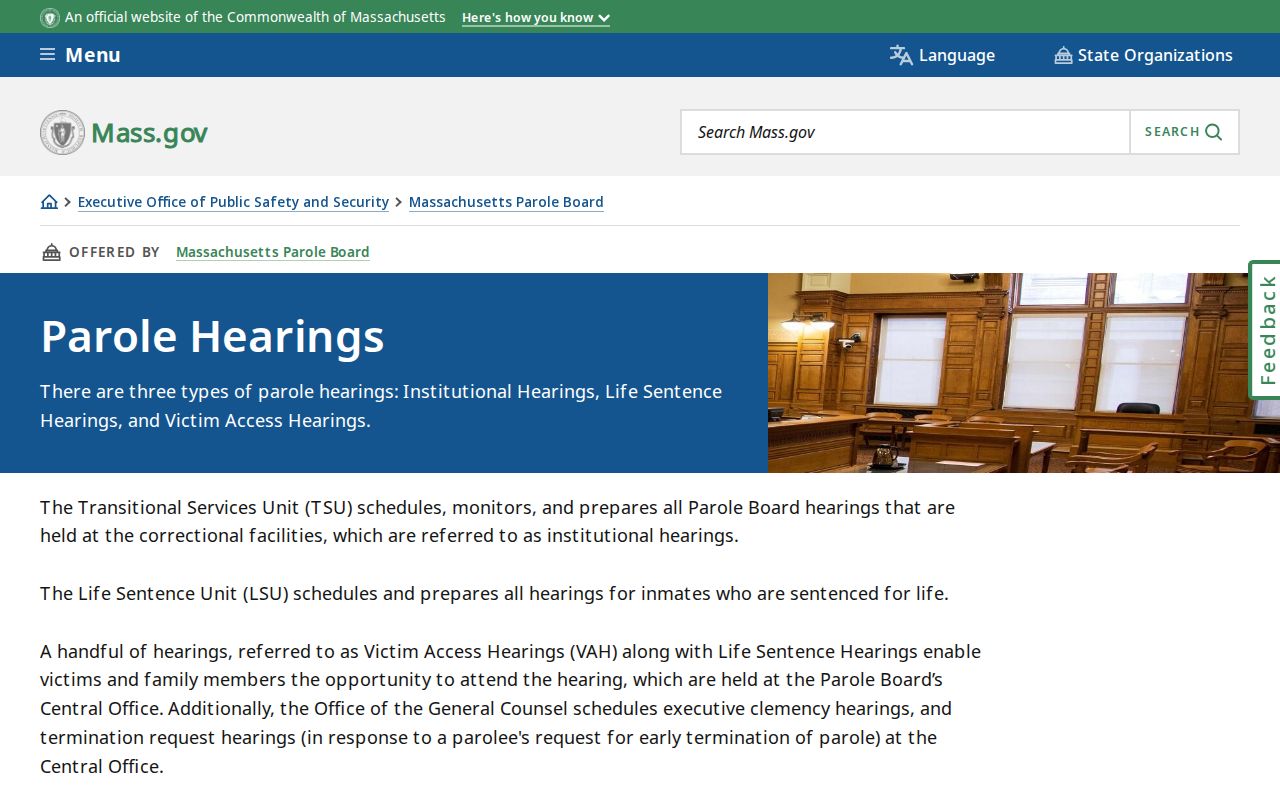
The public hub helps identify the correct Board process, but it is not a statewide roster of people now under supervision.
- Parole
- Conditional release under Parole Board jurisdiction before the sentence fully ends.
- Probation
- Court-ordered supervision managed through a Trial Court probation department.
- Discharge
- A documented end of a sentence or supervision authority, not merely departure from a facility.
- Absconder
- A person alleged to have stopped reporting or whose location is unknown while supervision continues.
Verify Massachusetts Parole or Probation
There is no sound one-box search for this task. The first step is to identify the authority behind the original custody and sentence. Massachusetts VINE covers MA DOC participation, not every county sheriff, and the official locator is framed around a person currently housed in state prison. A no-result cannot establish release, parole, probation, or the end of supervision. The Board's life-sentence decisions help only when the case falls within that public collection. Most adult probation details cannot be disclosed to an unrelated caller.
- Identify the case and custodian. Use the full name, commitment number if known, sentencing court, docket number, and last known institution or jail.
- For possible parole, check a life-sentence Record of Decision only when applicable. Then contact the Massachusetts Parole Board or the appropriate regional office for the permitted verification route.
- For possible probation, use MassCourts or the clerk to identify the sentencing or supervising court. Ask that court's probation department what proof or authorization it requires.
- For a past MA DOC release, request an existing release, movement, computation, or discharge record. Do not ask MA DOC for a county jail record.
- To prove that supervision ended, seek a certificate of termination, certificate of discharge, or another authorized final record. Do not treat portal silence as proof.
The MassCourts portal can help identify a court and view available docket events.
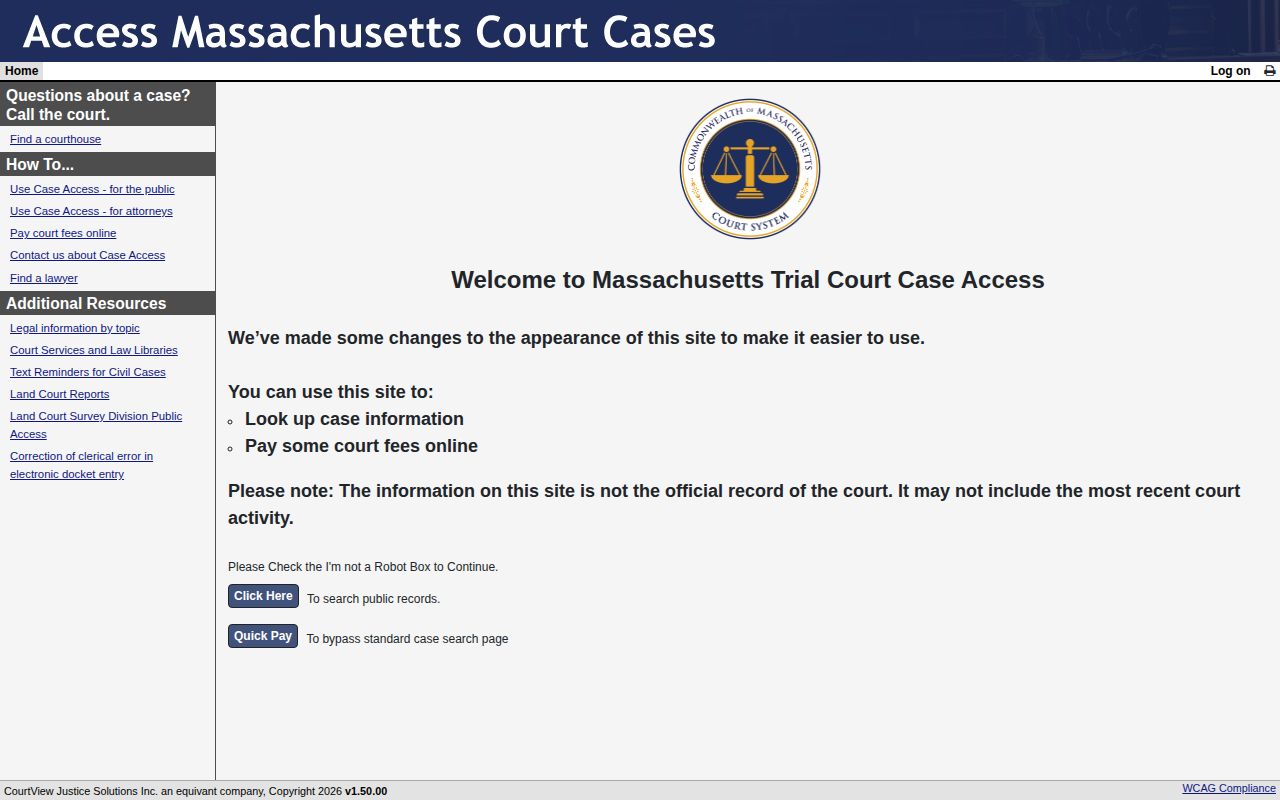
Most criminal cases available online require the exact docket number, and the clerk remains the holder of the official court record.
When a favorable life-case decision is relevant, the Massachusetts Parole Board hearings coverage explains how to separate a hearing date, a decision, and an actual release. That distinction matters because approval is followed by plan review and permit work.
Note: Record the date and exact identifiers used in each inquiry so different agencies can reconcile the same person and case.
Massachusetts Parole Supervision Offices
The Parole Board's Field Services Division carries out community supervision through nine regional offices. Its stated work includes verifying release plans, conducting home and community visits, monitoring participation and conditions, and recording supervision activity. The division also contains an Interstate Compact Office, which handles supervision that crosses state lines, and a Warrant Apprehension Unit. A Massachusetts office may therefore coordinate a parole plan even when the conviction or residence involves another state.
The official supervision page provides regional contacts and a way to report information concerning a wanted parolee. That reporting route should not be mistaken for a searchable absconder database. Research did not confirm a comprehensive public list of all Massachusetts parole absconders or all current parolees. For a current status question, contact the Board through the route appropriate to the case and expect access rules to apply.
A request should be narrow enough for the Board to identify an existing record. Useful details include the full name and aliases, the commitment number, the sentence or institution, the likely supervision period, and the exact document or fact sought. Ask whether the case belongs with central records or a regional office. A caller should not expect staff to create a new supervision summary from several files, and lawful limits may restrict personal, victim, medical, or security information. When the question concerns the end of parole, request the termination or discharge document rather than a broad case history.
Massachusetts Parole Board
Central Office
12 Mercer Road
Natick, MA
Phone: 508-650-4500
Toll-free: 866-480-6272
The MA DOC Releases to Community dashboard supplies statewide context for community departures.
The dashboard summarizes release activity; it does not identify whether one named person remains on parole or probation.
Massachusetts Probation Record Access
Probation information follows stricter access rules than a public court event list may suggest. The Trial Court access policy states that an adult probationer's status generally cannot be discussed with family, friends, a spouse, neighbors, or concerned citizens unless the probationer has signed a release. This means that finding a sentencing court does not create a right to obtain the person's current reporting status, conditions, or file.
A person requesting their own probation file may meet with the probation officer, state what material is sought, sign a release, and receive material after review and redaction by the chief probation officer. The policy also describes a narrower route for a victim protected by a no-contact or stay-away order to receive specified compliance or location-change information. These are defined access paths, not a general public lookup.
Statewide routing begins with the Office of the Commissioner of Probation at 617-727-5300, but supervision remains tied to the relevant court department. The docket can identify that court. If remote criminal-case access is unavailable without a docket number, contact the clerk and provide enough case detail to locate the official file. A docket event may show a sentence or later action. It does not by itself confirm that a probation officer may disclose current details.
Judicial and correctional records must also stay separate. MassCourts may show a sentence, a probation term, or a later court event when remote access is available. The clerk holds the official docket. MA DOC, by contrast, holds state-prison custody and discharge records, and the Parole Board holds its own decision and supervision records. One office cannot be assumed to answer for the other two. If a released person had probation and parole at the same time, verify each track through its own authority and compare the dates rather than treating either response as the whole post-release history.
Note: A signed release may permit access, but the probation department still reviews the requested material and may redact protected information.
Massachusetts Parole Warrants and Violations
Parole conditions are the rules attached to conditional release. Field Services monitors compliance, while the Board process addresses alleged violations and warrants. The official flow chart supports warrant action when a person's location is unknown or a triggering event occurs. It then shows preliminary and final processes that may lead to a return to custody, continued action, or reparole. A report that someone is wanted is not the same as a final finding.
Probation violations belong to the supervising court process, not to the Parole Board. Court docket events may help identify a hearing or order, although online access can be limited. For both systems, use the agency that owns the supervision record. VINELink may show an MA DOC custody event when a person is returned to state custody, but Massachusetts does not promise that VINE will display the full legal history or the reason for a supervision change.
The MA DOC release-type definitions show why a custody change needs careful reading.
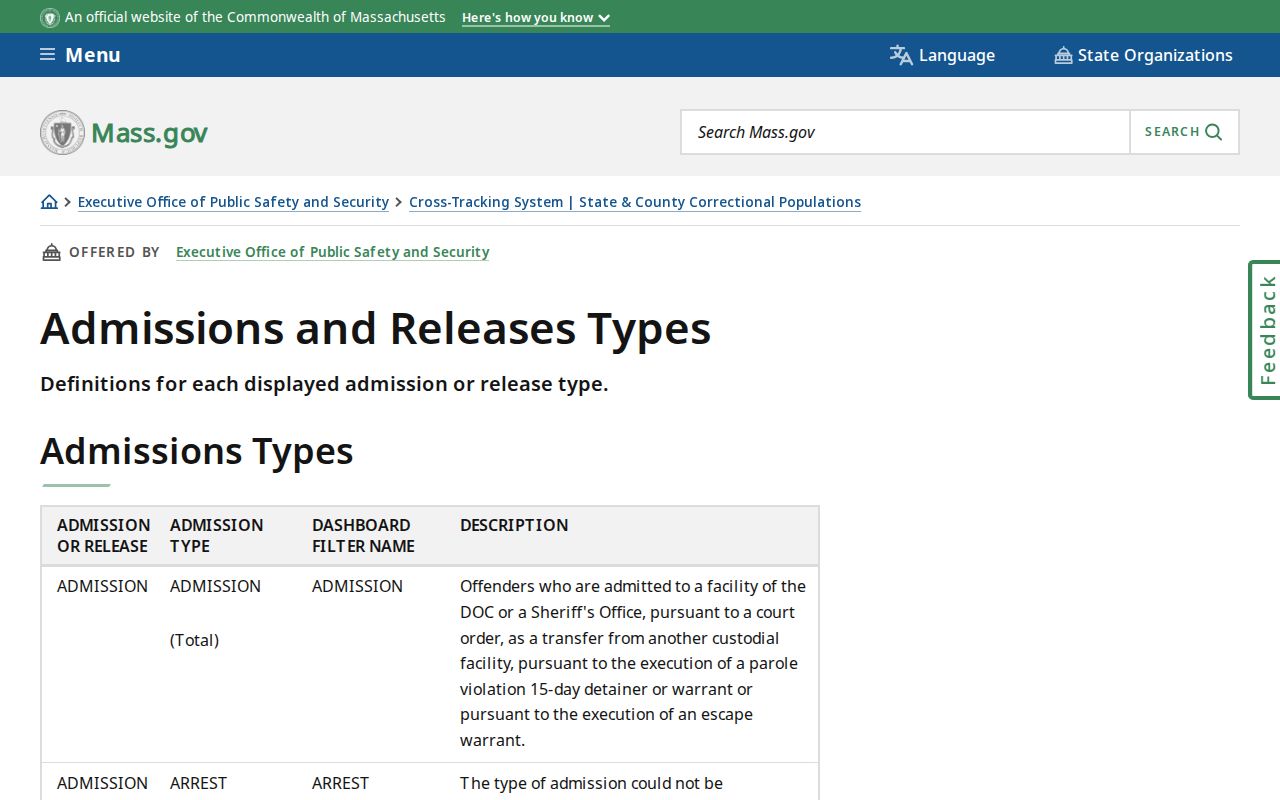
A transfer or change in legal status may still involve incarceration, so it should not be described as a return to the community.
Massachusetts Release and Discharge Certificates
Leaving a facility and ending legal supervision are separate events. Under M.G.L. c. 127, § 129C and § 129D, qualifying deductions that establish the reduced end of a prison term lead to a certificate of discharge. Under § 130A, the Parole Board may, by the required majority and when it finds termination in the public interest, issue a certificate terminating a parolee's sentence, ordinarily after at least one year of satisfactory parole.
Those certificates answer a narrower and stronger question than a custody-search result. A release record may show departure from MA DOC. A parole decision may show that the Board granted relief. A certificate shows the statutory end that the document records. Separate probation can still require its own court-based proof. When requesting records, name the document sought, the person's full name and aliases, the commitment number if known, the approximate period, and the facility or court connected to the case.
The MA DOC glossary defines the sentence and release terms used in correctional records.
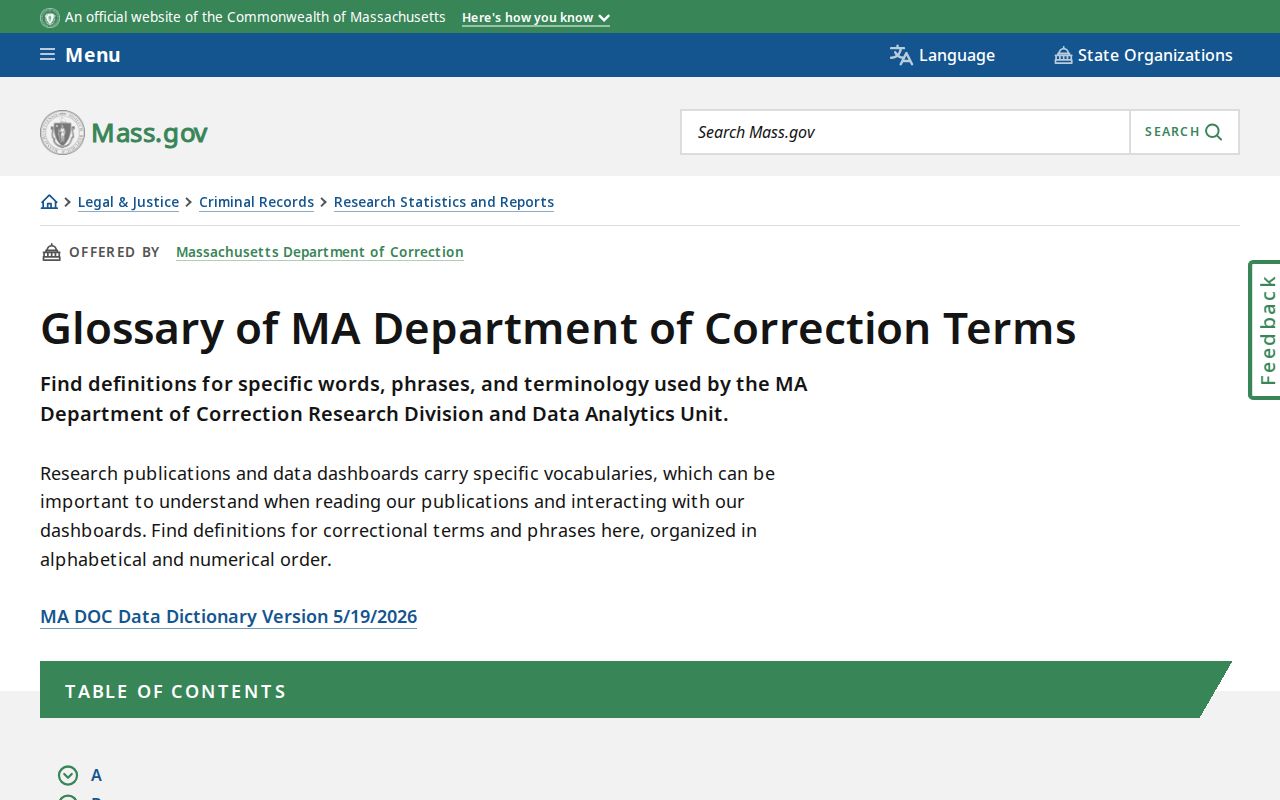
The glossary helps distinguish parole eligibility, release, sentence expiration, and discharge without treating those dates as interchangeable.
Massachusetts Supervision After Release
MA DOC's 2024 Prison Population Trends counted 1,223 releases. Of that group, 442 went to parole only, 248 to probation only, 339 to both, and 194 to no post-release supervision. In total, 1,029 releases, or 84 percent, involved at least one form of supervision. The same report shows total releases falling from 1,925 in 2020 to 1,223 in 2024 while the supervised share rose from 74 percent to 84 percent.
These dated figures explain why supervision verification is a core part of a Massachusetts release inquiry. They do not establish any named person's status, and the counts are release events under MA DOC's definitions. A proper check still follows the case: Board records for parole, the supervising court for probation, and discharge or termination documents when the question is whether authority ended.
The MA DOC releases dashboard provides a visual route into statewide release reporting.
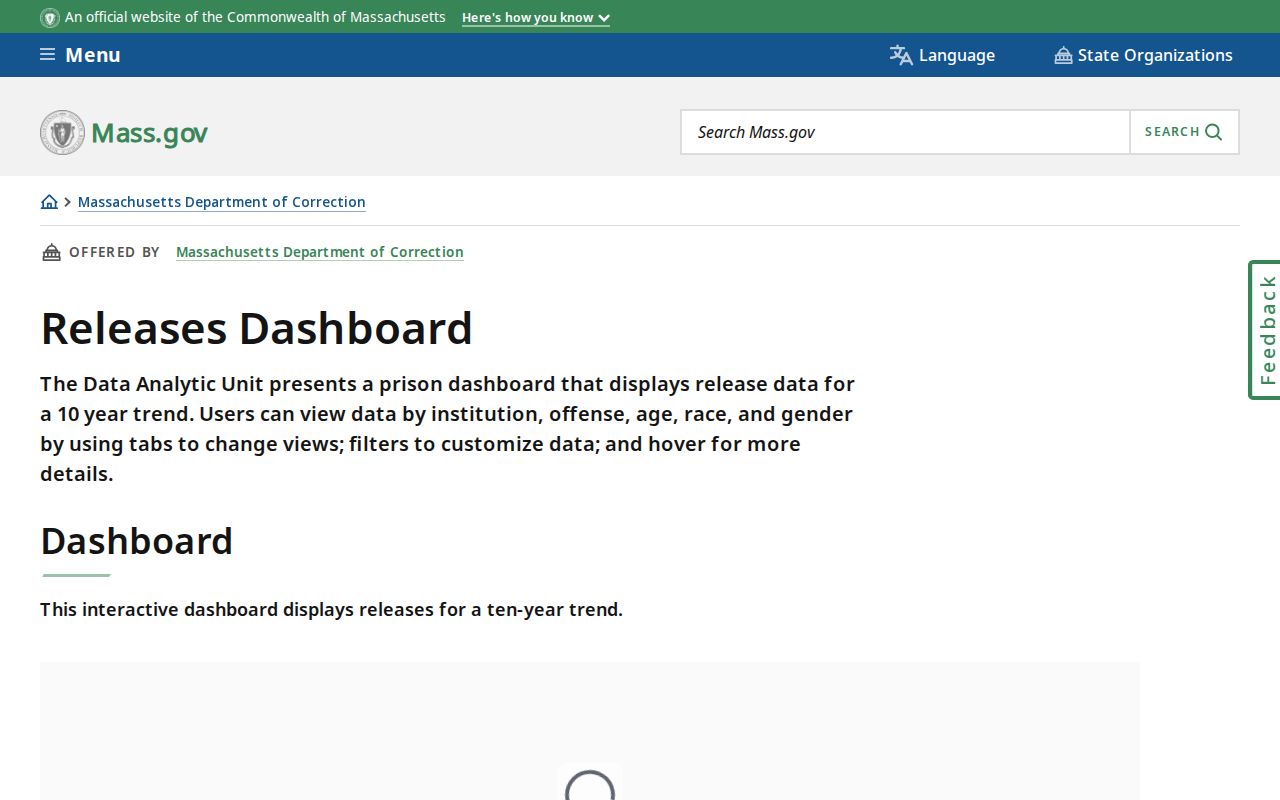
Dashboard totals supply trend context, while an agency record is still needed to verify one person's parole, probation, or discharge.
For a broader custody and release sequence, the Massachusetts released inmates search separates state-prison, county, court, and federal records before any supervision conclusion is drawn.