
Massachusetts Parole Board Hearings
The Massachusetts Parole Board decides parole matters and organizes hearings through units that reflect the sentence and proceeding involved. The Transitional Services Unit schedules institutional hearings at correctional facilities. Those hearings are closed. The Life Sentence Unit schedules hearings for eligible life-sentence cases. Central-office hearings are generally open, except Victim Access Hearings. The General Counsel's office schedules executive-clemency proceedings and requests to terminate parole.
That structure explains why there is no single calendar containing every possible case. The public hearing hub points to the available tracks, while the life-sentence calendar supplies monthly documents for that defined group. A person serving a non-life sentence may have an institutional process that is not presented on the public life calendar. A termination request or clemency matter may appear through a different Board collection. Start with the sentence type before concluding that a date is absent.
The official Massachusetts parole hearings hub lays out the Board's public hearing routes.
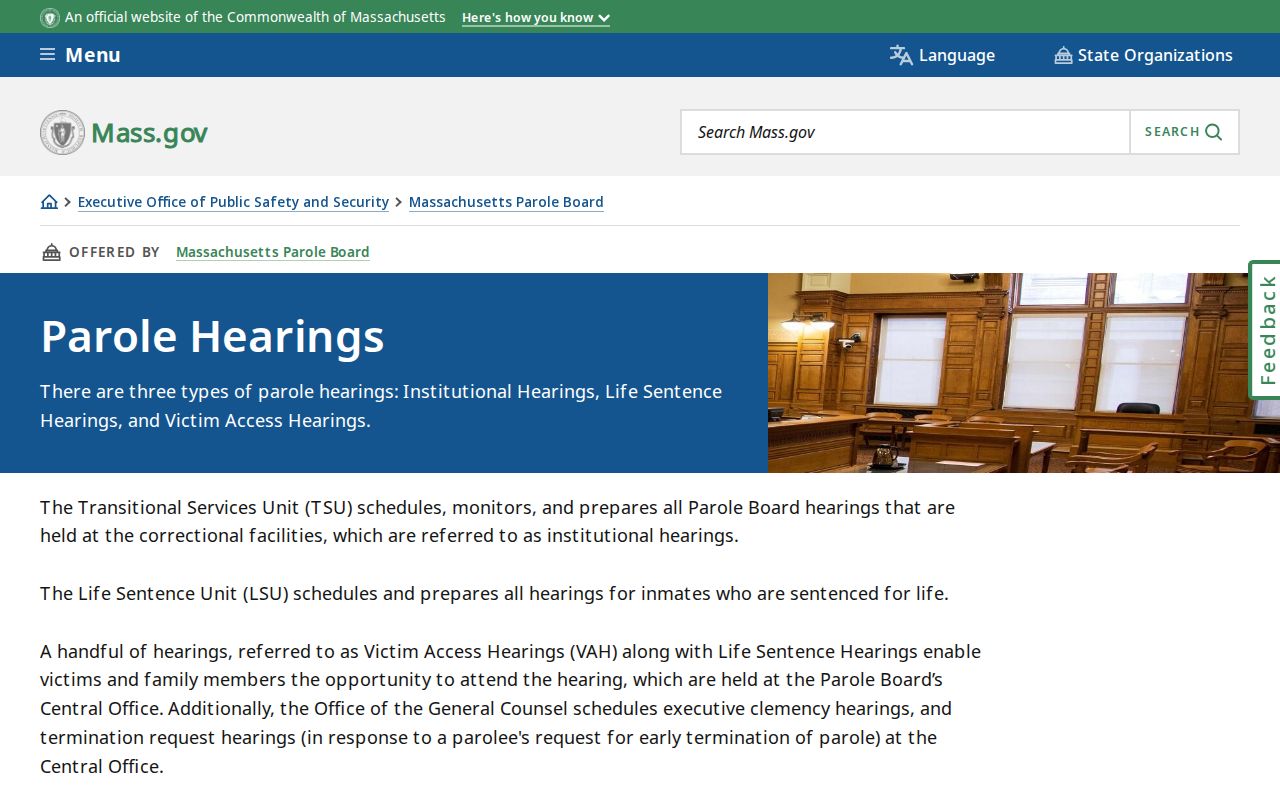
The hub separates institutional, life-sentence, central-office, clemency, and termination proceedings rather than offering one universal name search.
- Initial hearing
- A first listed life-sentence hearing at the relevant stage of parole eligibility.
- Review hearing
- A later Board hearing shown as a review on the public calendar.
- ROD
- A Record of Decision that documents a Board disposition and reasoning in a life-sentence case.
- Release permit
- The Board document executed after required post-decision work and before parole intake.
Find Massachusetts Parole Hearing Dates
The primary public schedule is the Life Sentence Hearing Calendar. It is an index of month-labeled documents, not a live calendar of every person who may appear before the Board. As reviewed on August 12, 2026, the page included monthly documents from January through September 2026 and a continuous monthly set for 2025. Some future-month material was already present. The supported publication pattern is monthly documents, sometimes posted ahead, not a fixed day on which every new calendar must appear.
- Confirm that the question concerns an eligible life-sentence hearing. A non-life institutional hearing follows a different and closed track.
- Open the Board's Life Sentence Hearing Calendar and choose the relevant year and month document.
- Search the document for the commitment name. Compare the hearing time and whether the entry is marked Initial or Review.
- Look for a postponement or rescheduling note. Move to the later monthly document when the hearing did not proceed as first listed.
- After the hearing, use the separate life-sentence ROD collection. Do not treat the calendar as a decision record.
The Life Sentence Hearing Calendar provides the official monthly index.
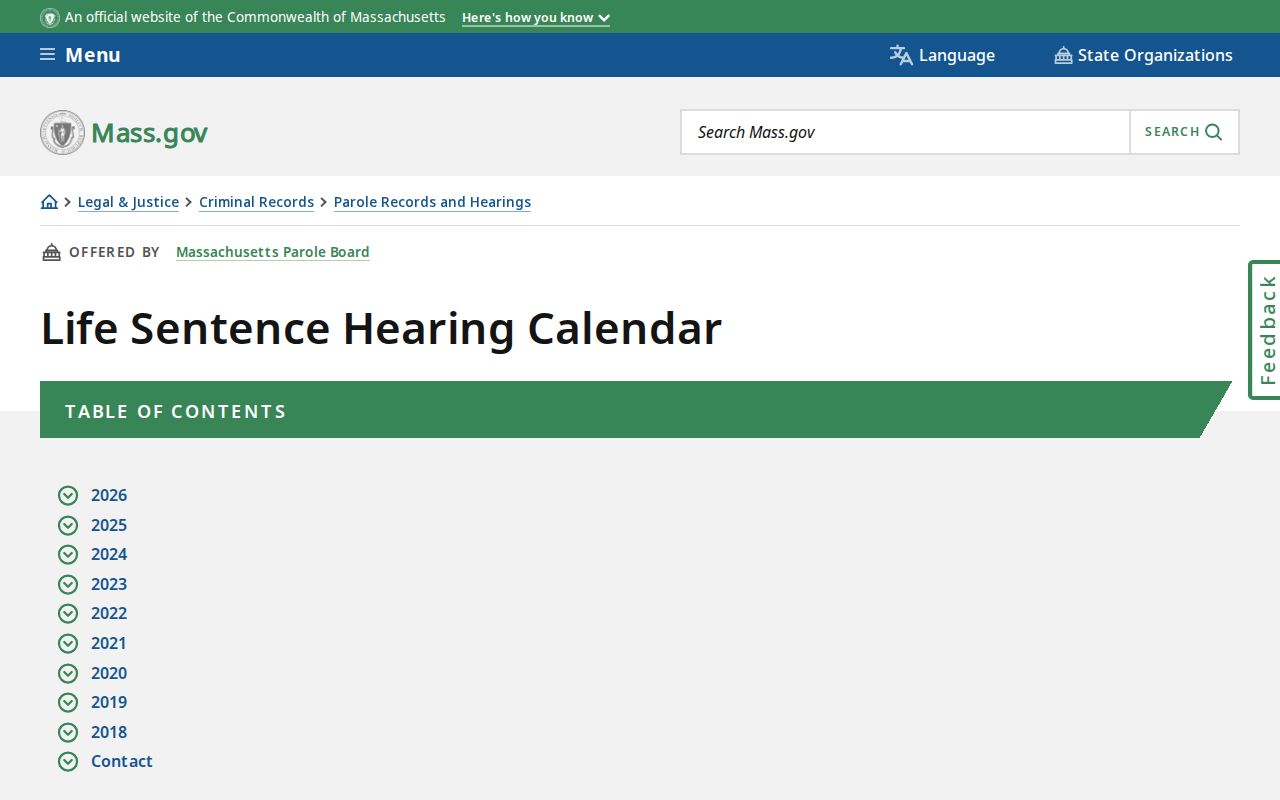
The monthly calendar can establish scheduling, but it cannot show the later outcome or the date of physical release.
Note: Save the month, listed status, and any rescheduling detail before moving from the calendar to the decision collection.
Find Massachusetts Parole Decisions
The public result source is the Life Sentence Records of Decision collection. Current decisions are organized by hearing year and then alphabetically by surname. Older records appear in a separate past-ROD collection. As reviewed on August 12, 2026, the current collection contained 2026 decisions through July. That dated observation should not be turned into a guaranteed posting lag. A later check may show more documents.
A ROD can show a grant, denial, reasoning, or another disposition. It applies to the life-sentence collection. The Board's records page states that life-sentence decisions are public online, while personal or client parole records require authorization. A non-life case, a supervision file, or underlying confidential material does not become public merely because the Board maintains a public lifer archive.
- Open the active life-sentence ROD collection and choose the hearing year.
- Use the surname grouping to locate the commitment name, then open the decision document.
- Read the disposition and reasoning in the document itself. Do not infer an outcome from a missing file.
- For an older life case, check the separate past-ROD collection.
- For personal, client, or non-life material, follow the Board's records access process and any authorization requirements.
The Life Sentence Records of Decision page is the official current collection.
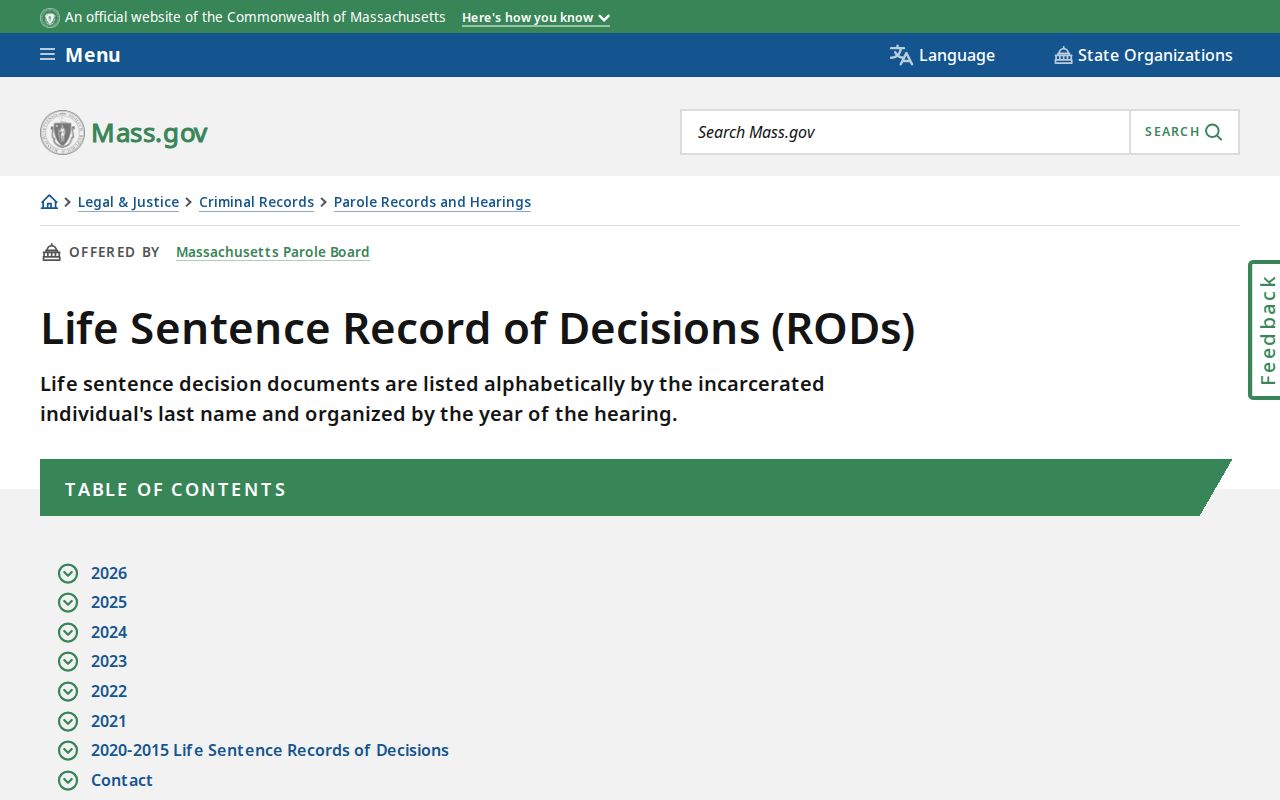
The surname-indexed documents provide lifer decisions, not an unrestricted list of all people now on parole.
Massachusetts Life Decision Limits
The public calendar and ROD archive are useful because they provide direct Board documents, yet their scope is narrow. They focus on life-sentence matters. They do not form a universal parole-decision database, a current-parolee directory, or a full supervision history. An old grant does not establish whether the person remains supervised today. A denial does not supply every later scheduling event unless the relevant Board document says so.
For a personal or client parole record, the Parole Records and Hearings page describes authorization and access. If the issue is current parole supervision, contact the Board or proper regional office. If the issue is physical departure, ask the custodian for the release record. When probation rather than parole follows the sentence, the record route shifts to the supervising Trial Court probation department, whose adult information is generally confidential.
This limit is a substantive Massachusetts finding. A statewide search should not convert a public lifer collection into an all-parolee lookup. Nor should a missing ROD be labeled a denial or proof that the person did not receive parole. Each conclusion must stay within the source's defined scope.
The MA DOC Releases to Community dashboard gives broader aggregate release context without naming individual parole cases.
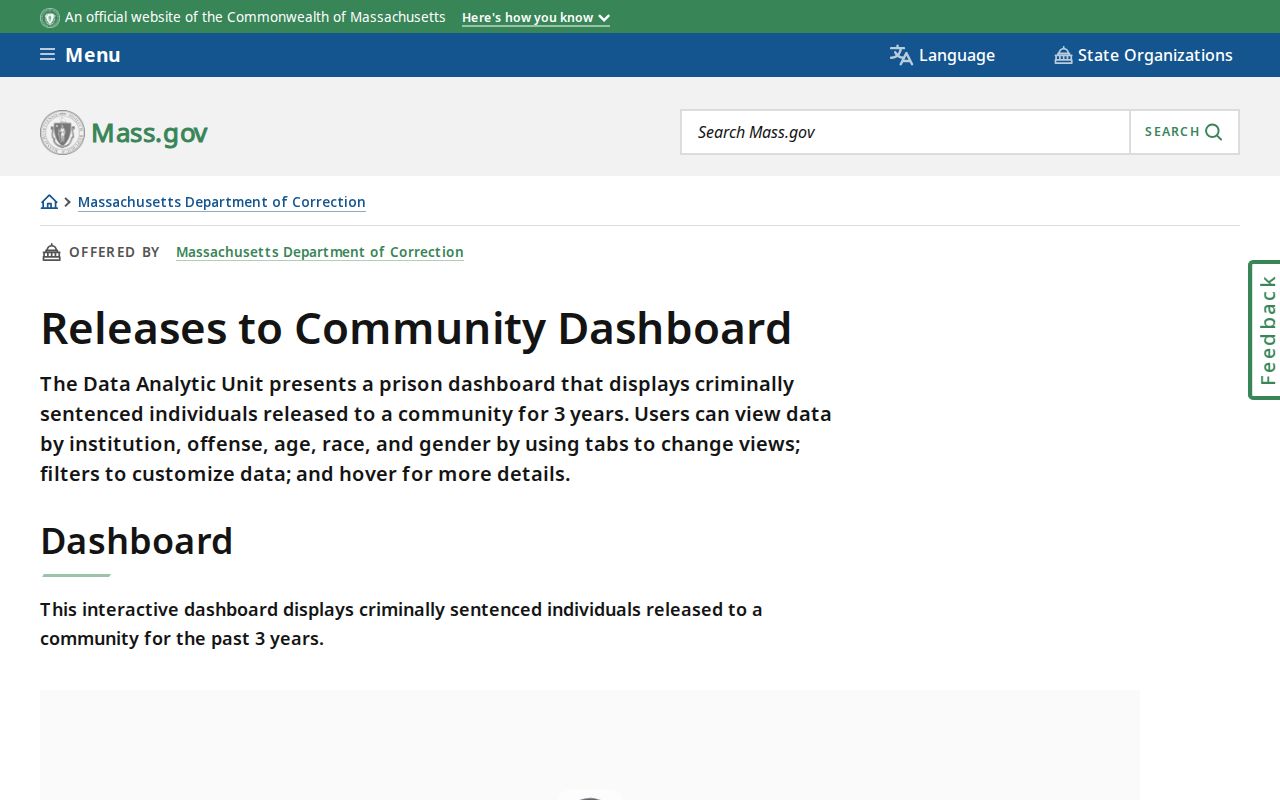
The dashboard helps measure state release patterns, while the Board's limited ROD collection remains the individual public decision route for life cases.
Massachusetts Parole Hearing Outcomes
Board records and calendars use different kinds of entries. Some describe scheduling, such as Initial, Review, postponed, or rescheduled. A ROD describes the disposition, such as a grant, denial, or another stated result. The label must be read in the document that uses it. A calendar status cannot be promoted into a decision, and a decision cannot be promoted into proof that the custodian processed release.
| Record entry | What it establishes | What to check next |
|---|---|---|
| Initial | The calendar identifies an initial life hearing | Check for rescheduling, then the later ROD |
| Review | The calendar identifies a review hearing | Read the applicable calendar note and later ROD |
| Postponed or rescheduled | The listed proceeding did not occur as first set | Find the later month or updated Board record |
| Grant | The ROD records favorable Board action | Verify plan review, permit action, and actual custody release |
| Denial | The ROD records unfavorable Board action | Read the decision for its stated reasoning and next process |
| Other disposition | The ROD records the result described in that document | Follow the specific language rather than assuming release |
The record sequence is short but strict: calendar, hearing, ROD, post-decision processing, release permit, custodian release, and regional intake when parole begins. Not every case moves through each step in the same way. The official documents should control the description.
Note: A calendar identifies a proceeding, while a Record of Decision supplies the Board result for the life case it covers.
Why Massachusetts Parole Grants Lag Release
A favorable parole decision is not an actual release date. The Board's official decision flow places home and work plan verification after the hearing. It also places release-permit issuance before intake by a regional office. An approved plan may involve Massachusetts community supervision, interstate supervision, another state or federal sentence, ICE custody, or another custodial placement. The destination therefore changes what “release” means.
The Transitional Services Unit schedules institutional hearings, calculates parole eligibility and discharge dates, executes release permits, and coordinates the transition. These functions occur within the release process, but the ROD does not by itself prove that each has been completed. The most direct proof of physical departure is the releasing custodian's record, which should identify the event and destination. A transfer to another agency ends one custody relationship without showing community release.
The MA DOC Admissions and Releases Types page shows the range of community and agency-to-agency events counted as releases.
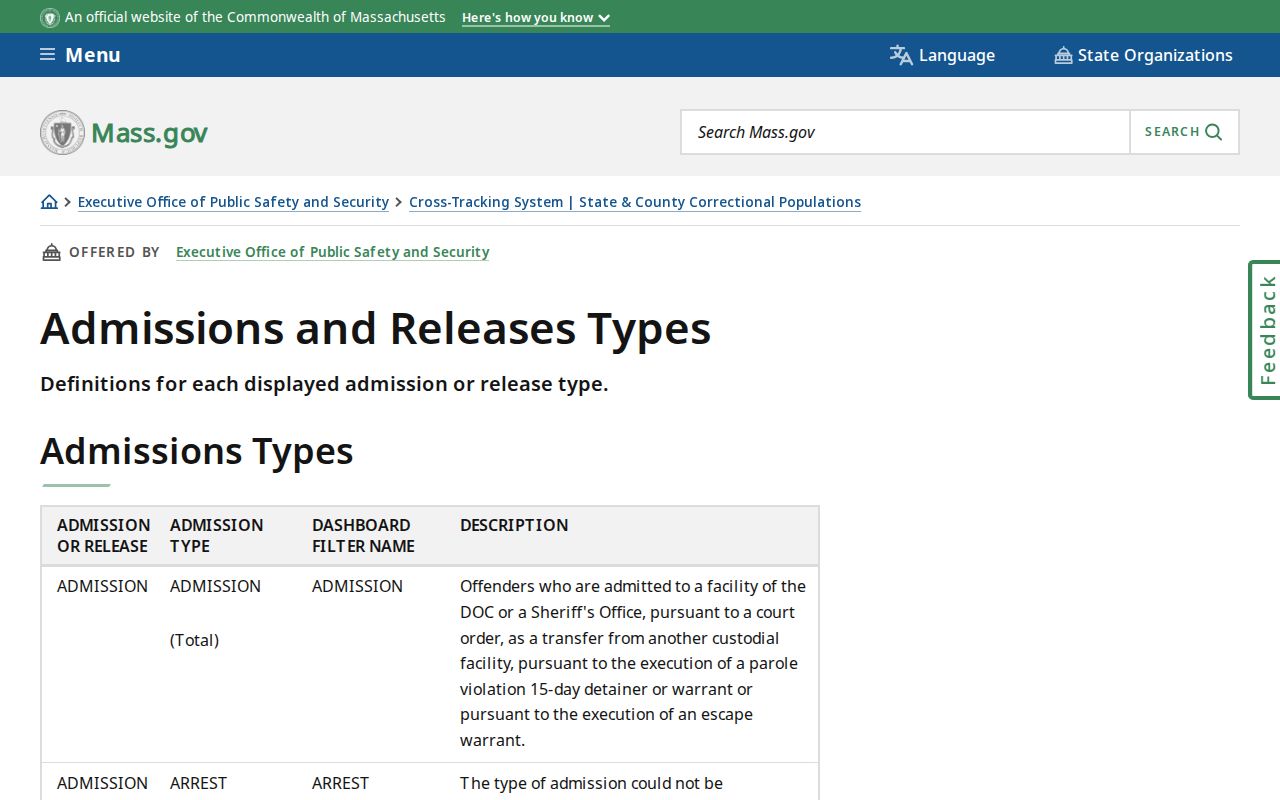
The official taxonomy makes destination and release type essential when a Board grant is compared with a later custody record.
Massachusetts Parole Hearing Eligibility
General eligibility rests in M.G.L. c. 127, § 133. A state prisoner ordinarily becomes eligible after serving the court-fixed minimum under the sentencing law, subject to qualifying deductions under § 129D. The statute also addresses concurrent and consecutive sentences and Board jurisdiction through the maximum or aggregate maximum unless the sentence ends sooner through lawful termination. Those rules make the court's sentence and MA DOC computation records more reliable than a lay estimate.
Section 133A governs life-sentence parole in more specific terms. It links the hearing to the fixed minimum for eligible lifers and generally calls for a public hearing shortly before that point. The law contains exclusions, including an adult serving life for first-degree murder and certain multiple-life-sentence situations from separate incidents. Those exceptions should be read in the statute, not reduced to a broad claim that every life sentence reaches a public parole hearing.
Sentence structure can change the calculation. Concurrent terms run together, while consecutive terms are served in sequence, and § 133 addresses the resulting minimum and maximum framework. Qualifying § 129D deductions may affect the eligibility calculation where the law permits them. None of these rules authorizes a public estimate to replace the Board and MA DOC records. When a date appears uncertain, the best record set includes the sentencing judgment, commitment information, official date computation, and the Board calendar or notice that applies to the case.
Eligibility does not equal a grant, and a grant does not equal sentence termination. Section 130A separately permits the Board to issue a certificate terminating the sentence when the statutory conditions are met, ordinarily after at least one year of satisfactory parole. Section 130C provides compliance credits that may reduce time under Board jurisdiction and may be rescinded. The court sentence, computation, hearing record, release record, and termination certificate answer distinct questions.
Massachusetts Clemency and Termination Hearings
Executive clemency and parole termination requests appear within the Board's hearing framework, but they are not ordinary parole-decision searches. The General Counsel's office schedules both types. Termination Request Hearings are posted through month-labeled documents when hearings occur. As checked on August 12, 2026, the archive showed February through July 2026 and selected older months, with gaps. It is accurate to describe those documents as event-based monthly postings, not an uninterrupted calendar.
A parole-termination hearing concerns whether Board jurisdiction should end under the applicable legal route. That is different from the original release hearing and from an MA DOC custody record. Executive clemency follows its own proceeding and should not be inferred from a parole ROD. When either matter is relevant, use the specific Board calendar or resulting document and keep its legal effect separate from actual departure from custody.
The archive's gaps also carry no implied result. A missing month may mean no document was posted for that period, not that every possible request was denied or withdrawn. Confirm the proceeding through the Board when the public list does not answer the question.
After a grant and release, the Massachusetts parole and probation record path explains regional supervision, probation confidentiality, warrants, and certificates that document the end of authority.