
Massachusetts Release Date Meaning
A projected date is a sentence-computation point, not a promise that a gate will open that day. MA DOC uses several dates for different legal and records tasks. Parole eligibility may arrive before sentence expiration. Earned deductions may affect a maximum term or a release-to-supervision calculation. A release order still must be checked, and the physical departure must be recorded. Court action, a warrant, or a transfer can change the route even after a date has been calculated.
A person awaiting trial presents a different problem. A pretrial detainee has not received a sentence from which to compute an expiration date. Release may depend on bail, a court order, dismissal, time credited after sentencing, or transfer to another authority. A sheriff or court record is the right source in that setting. MA DOC date rules should not be applied to a person who is held only in a county jail before disposition.
The MA DOC release taxonomy also warns that “release” can mean transfer to another criminal-justice agency or a legal-status change while the person remains incarcerated. Read the type and destination with the date. A departure from one agency does not by itself prove community release. The official MA DOC glossary illustrates the date terms used in sentence records.
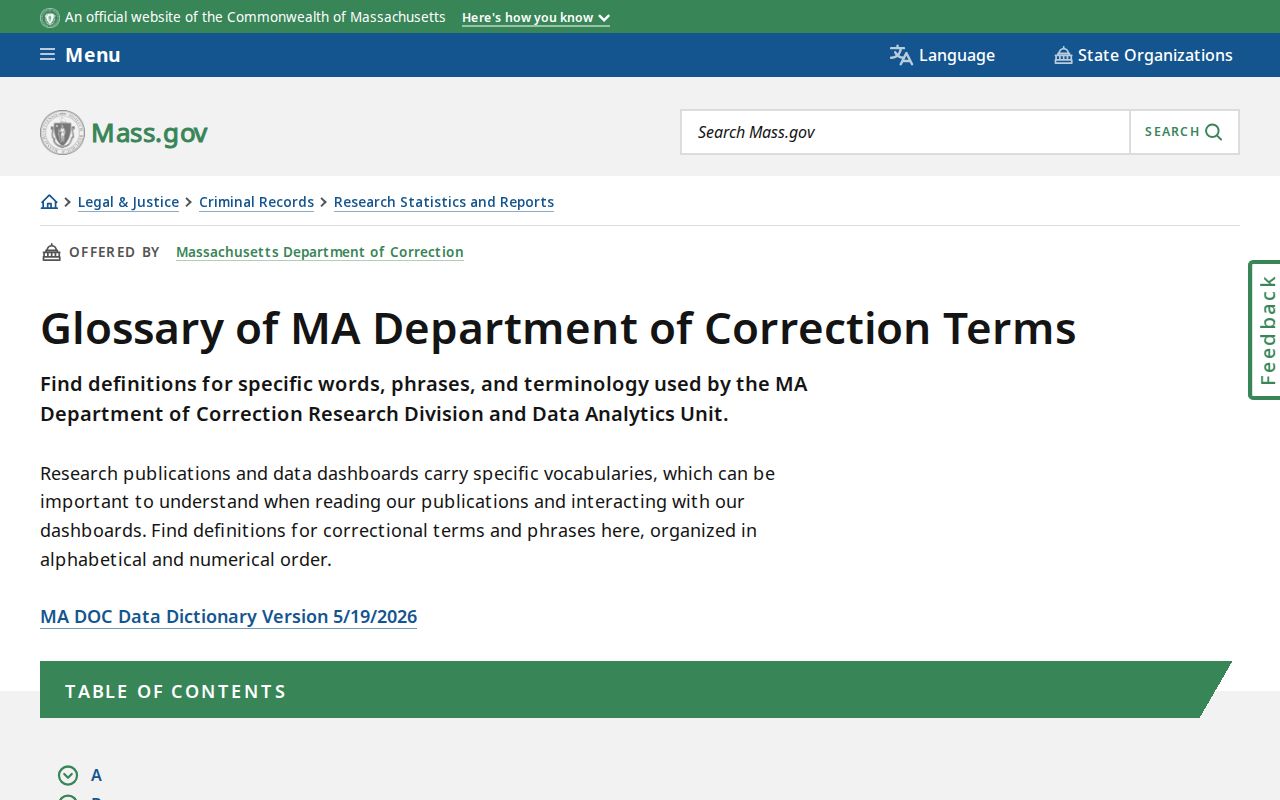
The glossary is useful for decoding a computation sheet, but it does not turn an internal date into a public guarantee.
Find Massachusetts Inmate Release Dates
Start by identifying who holds the person. Massachusetts has no verified public MA DOC projected-release field. The Commonwealth's official lookup is labeled for someone housed or being held in a state prison, and it routes to VINELink. The instructions accept a full first and last name or a commitment number. They do not promise that a public result shows an ERD, projected discharge date, actual release date, or old discharged profile.
A county jail or house of correction does not become part of that lookup merely because it is in Massachusetts. The official state page says only MA DOC participates in Massachusetts VINE. For a county sentence, use the County Directory to reach the sheriff and court that computed the term. For state custody, use the MA DOC present-custody check, then request the computation or release record needed to answer a past or future date question.
- Confirm whether the person is in MA DOC, a sheriff's jail or house of correction, federal custody, or another system.
- Use the person's exact full name or commitment number on the official MA DOC route when state custody is likely.
- Do not read a missing result as proof of release. Check spelling, identifiers, and the last known custodian.
- Ask the correct records officer for an existing computation sheet, release order, certificate, or movement entry.
- Compare the document with the court disposition and any parole record before treating the date as final.
The official MA DOC locator instructions show the narrow housed-person scope.

This screen is a present-custody starting point, not a public calendar of projected Massachusetts release dates.
Note: Record the name, number, source, and time checked so later agency answers can be compared with the same identity details.
Massachusetts Release Date Terminology
Massachusetts sentence records can contain several dates, each answering a distinct question. The Earliest Release Date, or ERD, is the earliest point at which release may be possible after parole eligibility and deductions that may be earned are considered. ERD Max is tied to the controlling maximum and identified deductions, but it excludes parole eligibility. The minimum sentence date is used in parole timing. Expiration reflects the sentence term after legally applicable credit.
The projected discharge date serves an internal records workflow. Under 103 CMR 411, institutional records staff submit a projected date that accounts for applicable program and activity deductions. Under 103 CMR 410, the Central Date Computation Unit constructs sentences and calculates dates in the Inmate Management System. Records staff then review the planned discharge paperwork. These processes occur within MA DOC. Research did not establish any public VINELink field displaying them.
| Date term | What it answers | Public field established? |
|---|---|---|
| ERD | Earliest eligibility point including parole and deductions that may be earned | No |
| ERD Max | Controlling maximum adjusted by identified deductions, without parole eligibility | No |
| Minimum sentence date | Parole-timing point set by the sentence framework | No |
| Projected discharge date | Internal computation and records-planning date | No |
| Actual release | Recorded departure or transfer event | Seek the custodian's record |
MA DOC also announced an internal tablet tool in 2026 that gives incarcerated people anticipated release timing for planning. It is not a public locator. The distinction matters: access provided to the person in custody does not establish a public release-date search for someone else.
Massachusetts Earned Release Credits
Massachusetts General Laws chapter 127, section 129D authorizes deductions for satisfactory conduct and qualifying educational, vocational, work-release, prison-industry, and approved rehabilitative activity. The rate depends on the custody setting and the credit involved. For a state-prison sentence, the law allows up to 7.5 days per qualifying program or activity per month, capped at 15 days in a month under the main program-credit provision. A house-of-correction term uses lower limits: up to five days per program or activity and ten days in a month.
Completion credit is another part of the calculation. A qualifying state prisoner may receive up to 80 days for a designated program or activity. The aggregate completion-credit cap is 17.5 percent of the imposed maximum. Other limits apply when credits reduce an imposed minimum or maximum. Section 129C separately permits prison-camp credit of up to 2.5 days per month for satisfactory conduct. Those details make a generic online calculator unsafe.
| Credit | State-prison rule | Effect on release record |
|---|---|---|
| Program or activity | Up to 7.5 days per activity monthly; 15-day aggregate monthly cap | May move the computed discharge or supervision date |
| Completion | Up to 80 days for a designated activity; aggregate cap applies | Included only when eligibility and completion are approved |
| Prison camp | Up to 2.5 days monthly under section 129C | May reduce the maximum when the statute applies |
| House of correction | Up to five days per activity and ten days monthly | Computed locally by the proper custodian |
The MA DOC releases-to-community dashboard provides context on completed release events.
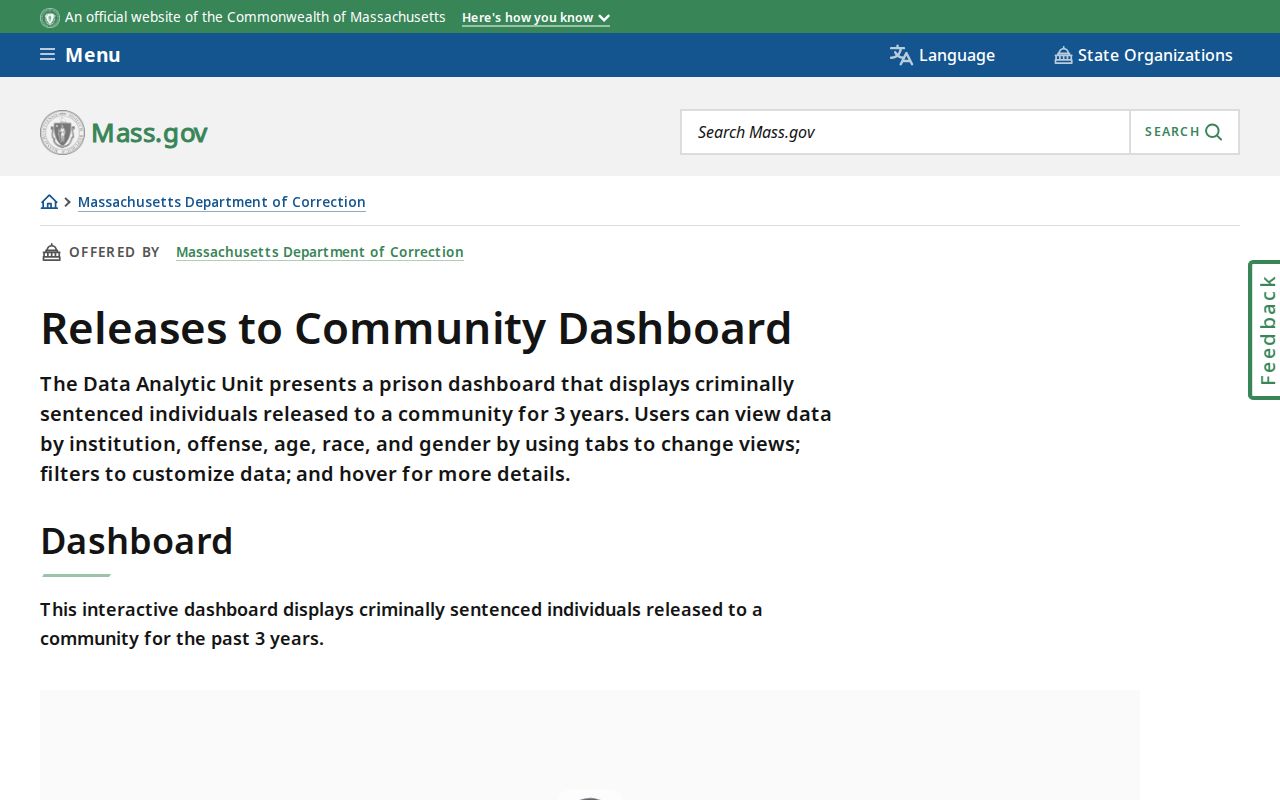
A dashboard reports groups and trends. It does not calculate or verify one inmate's release date.
Massachusetts Truth-in-Sentencing Divide
Offense date creates a major divide in Massachusetts computation. The MA DOC glossary says statutory good time was eliminated for offenses committed after June 30, 1994 under the Truth-in-Sentencing Act. That change does not mean all later sentences receive no deductions. Earned program and activity credits under section 129D remain part of eligible computations. Older cases may raise legacy statutory-good-time questions that do not fit newer cases.
Sentence structure adds more variables. A mandatory minimum may restrict which credit can affect a date. Concurrent terms run together in a way that differs from consecutive terms. Jail credit, forfeiture or restoration of deductions, parole eligibility, and completion credit can change the controlling calculation. The source record must identify the offense dates and sentences before any credit rule is applied. A single percentage or fixed “time off” formula cannot reliably bridge the 1994 line.
The official Admissions and Releases Types page shows why date and outcome must be read together.
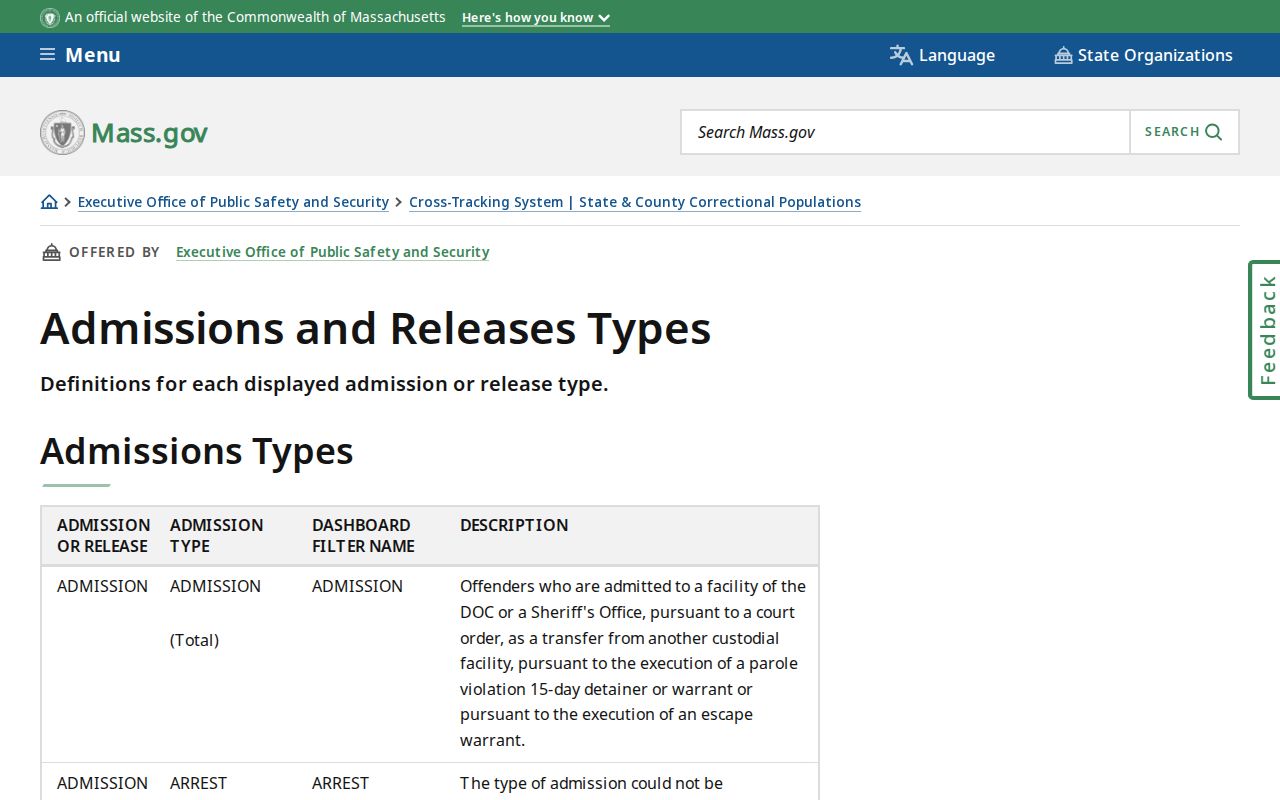
The categories separate community departure, supervision, another-agency custody, and legal-status changes that can leave a person incarcerated.
Massachusetts Release Date Changes
Even an official computation can change before departure. Credits may be earned, lost, forfeited, or restored under the governing rules. A corrected sentence, added jail credit, or later court order may alter the controlling terms. Parole can permit a supervised community departure before expiration, but a favorable decision is not the physical release record. The release plan and permit still must be completed.
Another agency can also change the practical answer. A warrant, detainer, federal matter, immigration hold, or another sentence may cause a direct transfer. The first agency may record a release because its own custody ended. The person may remain confined elsewhere. For that reason, “released,” “discharged,” “transferred,” and “sentence expired” should not be treated as synonyms.
| Factor | Possible date effect | Record to check |
|---|---|---|
| Earned-credit change | Moves an eligible computation | Current computation sheet |
| Court correction or order | Changes the legal sentence or directs release | Court docket and amended order |
| Parole action | Creates or changes a supervised-release path | Board decision, permit, and release entry |
| Warrant or detainer | May cause a hold or agency transfer | Movement record and receiving-agency record |
| Administrative review | Corrects dates or supporting paperwork | Approved release order or certificate |
The public MA DOC releases dashboard illustrates aggregate events rather than fixed individual projections.
Its measures need their stated definitions and dates, especially when a release can include another custodial destination.
Note: A past date plus no current facility may support departure from one agency, but the destination still controls what the event means.
Massachusetts Release Date Records
Documentary confirmation begins with a specific request. Ask MA DOC for an existing sentence-computation sheet, release order, certificate of discharge or release, release-type entry, or custody-movement history. Give the full name and aliases, commitment number if known, approximate custody period, facility, and a narrow date range. State the preferred electronic format. An agency need not create a new calculation or answer, and lawful redactions may apply.
Massachusetts public-records law ordinarily requires the records access officer to produce the record, permit inspection, or explain withholding within ten business days, subject to exemptions, fees, and authorized extensions. MA DOC says the first four hours of response work are free and later work can cost up to $25 per hour. Its records office does not handle sheriff jail or house-of-correction files. Those requests go to the relevant county custodian.
The MA DOC public-records page identifies the available request route and its scope.
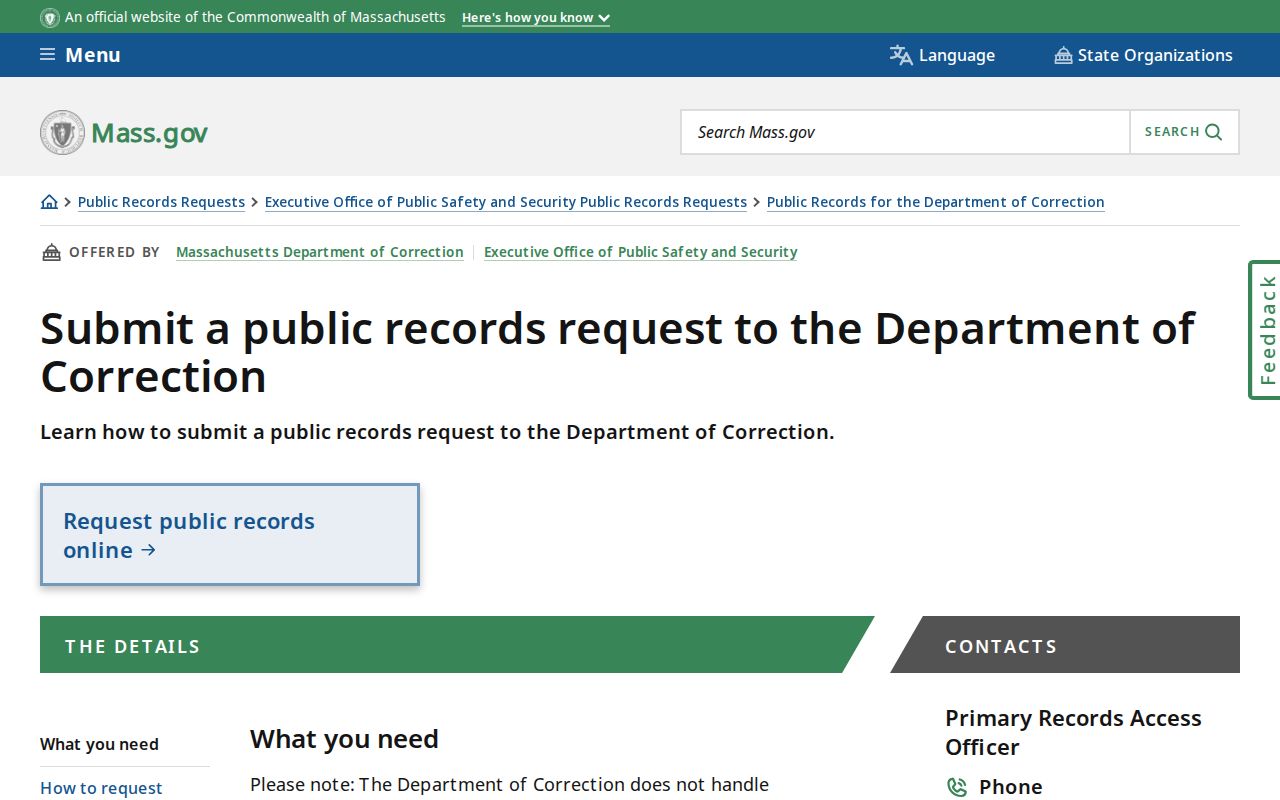
A focused request is more likely to locate the existing record than a broad demand for every fact about a person. For an event that has not occurred, the VINELink Release Check can support custody-event notification for MA DOC. It cannot supply the public projected date that Massachusetts has not documented. Confirm the event afterward with the custodian's release entry, especially when another agency may have received the person.